
What to know about Bluetooth® Classic, Bluetooth LE Audio, and Auracast™ broadcast, and why Phonak uses Bluetooth Classic today
As new Bluetooth technologies become available, it can be hard to know what is relevant for everyday use. This article looks at how each technology works, where things stand today, and why Bluetooth Classic remains the best choice for Phonak hearing solutions at this time.
Bluetooth connectivity has become a central part of how many people use their hearing aids. With manufacturers introducing new Bluetooth features at different speeds, it can be difficult to know what is ready for everyday use and what is still developing.
At Phonak, we continue to use Bluetooth Classic because it provides the most universal and seamless connectivity experience for hearing aid users today. The sections below explain why this is the case and how both Bluetooth Classic and Bluetooth LE Audio influence the hearing aid experience now and in the future.
1. Bluetooth Classic: The most universal option today
Bluetooth Classic has supported wireless audio for more than twenty years. It was designed for one-to-one communication and is used for everyday tasks such as streaming media, taking phone calls, and using voice assistants.
One of the biggest strengths of Bluetooth Classic is its broad compatibility. It is found on nearly all Bluetooth devices, including smartphones, tablets, smart watches, computers, televisions, and cars, which makes it the most universal option for hearing aid users.
2. Bluetooth LE Audio: A next-generation platform that is still gaining adoption
Bluetooth LE Audio is the newest Bluetooth standard, and its availability is still developing. Some newer Android devices support LE Audio, yet adoption across operating systems, manufacturers, and accessories remain uneven.
The technology uses the Bluetooth Low Energy radio to deliver efficient, high-quality audio while reducing power consumption. A key part of this improvement is the LC3 codec, which provides clear sound at lower data rates.
LE Audio also introduces Multi-Stream Audio, allowing a device to send multiple synchronized audio streams. This opens the door to new possibilities, such as broadcasting multiple language streams to different listeners from the same source.
Bluetooth LE Audio includes two main applications:
- Bluetooth LE Audio Unicast
Enables one-to-one communication and supports familiar use cases such as media streaming and hands-free calls, like Bluetooth Classic, but with greater power efficiency.
Dual mode devices with both Bluetooth Classic and Bluetooth LE Audio Unicast are expected to become common to offer benefits from both sides. New Android devices offer LE Audio Unicast in parallel with Bluetooth Classic. With a switch on the device, users can decide for themselves which Bluetooth technologies to use for streaming and hands-free calls.
- Auracast™ broadcast
Enables one-to-many audio experiences. Auracast broadcast is one of the most discussed features of LE Audio because it introduces completely new listening possibilities. A single transmitter can broadcast audio to an unlimited number of receivers, which could change how people access sound in public and private environments.
Devices can offer Auracast broadcast in combination with LE Audio Unicast or Bluetooth Classic. Auracast broadcast can also be offered as a stand-alone application for dedicated Auracast transmitters.
Public uses:
Theaters, museums, conference centers, and places of worship can install Auracast transmitters to provide clearer access to presentations or audio guides. Visitors can tune in directly using their hearing aids or earbuds.
Private uses:
Individuals can share audio from their own device with nearby friends or family members, creating simple and convenient shared listening experiences.
Despite this promising potential, Auracast broadcast real-world adoption is still in an early development stage, with only a small number of devices and public venues currently supporting Auracast broadcast. As support across devices, operating systems, and public spaces grows, Auracast broadcast is expected to become an important connectivity option for hearing aid users. For now, however, it remains an emerging technology rather than one that users can rely on in everyday situations.
Why Bluetooth Classic remains the best Phonak solution right now
Although Bluetooth LE Audio offers exciting possibilities, especially with Auracast broadcast, Phonak Bluetooth Classic hearing aids continue to provide the best experience for hearing aid users today.
• Universal compatibility
Bluetooth Classic works with virtually all modern devices. It is found on nearly all Bluetooth devices, including smartphones, tablets, smart watches, computers, televisions, and cars. It is the only option that covers all iOS and Android devices, including newer devices offering LE Audio, which makes it the most dependable choice for patients who move between different devices throughout the day.
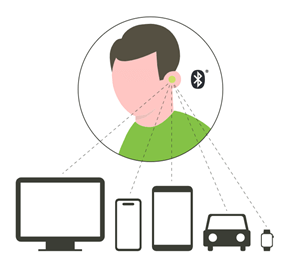
Figure 1: Bluetooth Classic works with virtually all modern Bluetooth devices, giving patients a dependable, consistent connection as they move between phones, tablets, computers, cars, and wearables.
• Two simultaneous connections (Phonak feature)
Most hearing solutions on the market support only one active connection at a time. Phonak hearing aids go further by offering two simultaneous connections with Bluetooth Classic, allowing users to switch smoothly between calls, apps, and media on different devices without manually disconnecting and reconnecting.
What hearing care professionals should take away
- Bluetooth Classic remains the most universal and easy-to-use connectivity option for hearing solutions. It supports daily communication needs and works across the widest range of devices with the fewest limitations.
- Phonak hearing aids offer simultaneous connections to two devices, which is not available with most Bluetooth LE Audio and Bluetooth Classic implementations in hearing aids from competitors.
- Bluetooth LE Audio, including Auracast broadcast, represents the future of wireless audio. As adoption grows, these technologies will expand what hearing aids can do and how users engage with sound in both private and public settings.
- By understanding the current landscape and where Bluetooth technology is heading, hearing care professionals can help patients feel confident in their connectivity options today while preparing them for innovations to come.