
Turning 50 into a prompt for better hearing health
A national letter campaign inviting Australians to have their hearing checked at age 50 offers a compelling real-world example of how to position adult hearing screening as routine preventive care and put the WHO’s life-course approach to hearing care into practice.
In July 2026, Australia’s Department of Health, Disability and Ageing began mailing letters to everyone turning 50, as part of a national campaign encouraging healthier choices in midlife.1
The campaign includes “regular hearing checks” in a simple checklist for healthy aging. Other action items on the checklist include vision checks, managing heart health and diabetes, staying physically active and remaining socially connected and mentally active.
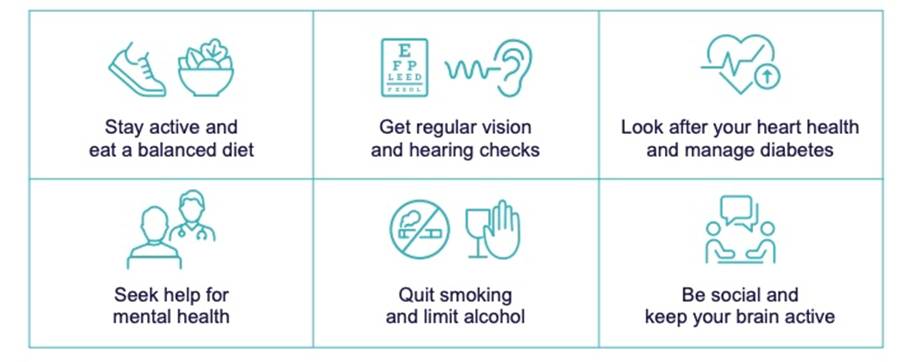
The campaign’s stated motivation is dementia risk reduction, reflecting growing evidence that a number of everyday health factors are linked to cognitive decline later in life. By placing hearing alongside other aspects of health in midlife, the initiative also reflects the WHO’s life-course approach to hearing care.2
For hearing care professionals, the way the initiative positions hearing care is particularly interesting. This is one of the few public health initiatives anywhere to systematically prompt an entire population, at a specific age, to think about their hearing before they notice a problem. That is worth examining closely, wherever in the world we practice.
A birthday reminder we can get behind
Many adults think nothing of booking a routine eye test or a six-monthly dental check-up. In many countries these habits are so embedded in how we manage our health that we rarely question them. Hearing checks have never quite made it onto that list, despite hearing loss being just as common, and just as manageable, as changes in vision or dental health.
A recent international survey of hearing care and screening practices, published in the Brazilian Journal of Otorhinolaryngology, makes a clear case for closing this gap.3 The authors noted that two in three adults over 60 have some degree of hearing loss, yet systematic hearing screening remains largely absent from routine primary care in most countries.
In a survey of 62 clinicians across 22 countries, Lammers and colleagues (2025) found that 92% considered adult hearing screening cost-effective. However, cost, infrastructure and funding remained the main barriers to offering it consistently. The authors proposed a protocol combining two red-flag questions, the HHIE-S questionnaire and a Digits-in-Noise test, with screening every five years from age 50 to 65, and every one to three years after that.
Seen alongside that research, the Australian campaign may be a real-world attempt at exactly the kind of systematic, age-anchored screening the evidence has been calling for.
Normalizing hearing care
The letter does not stop at encouraging a hearing check. It also helps actively lower the barrier to having broader health conversations. The letter includes a QR code and website link to allow recipients to calculate their personalized dementia risk score. It also encourages a discussion about the results with their doctor or primary healthcare provider at their next appointment.
Importantly, the campaign takes a step towards making hearing care feel routine. It presents a visit to a hearing care professional as an unremarkable, expected part of turning 50, rather than a step reserved for people who already suspect a problem. In doing so, the campaign may chip away at the stigma that still surrounds hearing loss and hearing aid use in many countries.
A hearing check becomes as ordinary as other health checks. That shift in perception may do as much for long-term hearing health as the screening itself.
A textbook example of holistic hearing care
Perhaps most notably, the Australian initiative puts into practice the same philosophy underpinning the World Health Organization’s updated guidance on dementia risk reduction2 highlighted in another recent Phonak Audiology blog.
The WHO does not suggest that hearing aids prevent dementia. Rather, it recognizes hearing care as one part of a broader, person-centered approach to healthy aging, recommending the prevention, screening and timely management of hearing loss alongside other lifestyle factors.
For hearing care professionals, this holds a useful lesson. When someone books a hearing check because of a letter about brain health, that appointment becomes an opportunity to talk about more than thresholds and speech scores. It opens the door to conversations about confidence, participation in social and family life, and everything else that meaningful hearing care can support.
Key takeaways
- Turning a universal milestone, the 50th birthday, into a national screening prompt is a genuinely powerful behavior-change tool that can reach people who might never otherwise consider booking a hearing check.
- It helps normalize hearing screening as routine preventive care, on par with the eye and dental checks most adults already build into their calendars.
- It challenges the assumption that a hearing appointment should happen only after someone notices a problem, easing the barriers that keep many people from seeking help sooner.
- It reflects a genuinely holistic model of hearing care, placing hearing health within the broader context of cognitive, physical and social well-being.
Looking ahead
It will be worth watching whether other countries adopt similar birthday-based prompts and how Australia’s newly invited 50-year-olds respond over time. In the meantime, the campaign stands as a useful case study for our profession: hearing care, delivered early and as part of routine health maintenance, can support health and well-being throughout later life.
Learn more about Australia’s dementia risk reduction campaign and its recommendations for regular hearing checks. https://www.health.gov.au/topics/dementia/reduce-your-risk-of-dementia
References:
- Australian Government Department of Health, Disability and Ageing. (2026, July 16). Reduce your risk of dementia. https://www.health.gov.au/topics/dementia/reduce-your-risk-of-dementia
- World Health Organization. (2026). Risk reduction of cognitive decline and dementia: WHO guidelines (2nd ed.). World Health Organization. https://www.who.int/publications/i/item/9789240123557
- Lammers, M. J.-W., Raine, C., Mertens, G., van Rompaey, V., Hagen, R., Kurz, A., Skarzynski, P. H., Lorens, A., Opie, J., D’Haese, P., Grasso, P., Lassaletta, L., Calvino, M., & Anderson, I. (2025). Towards an adult hearing screening procedure. Brazilian Journal of Otorhinolaryngology, 91(4), https://doi.org/10.1016/j.bjorl.2025.101616