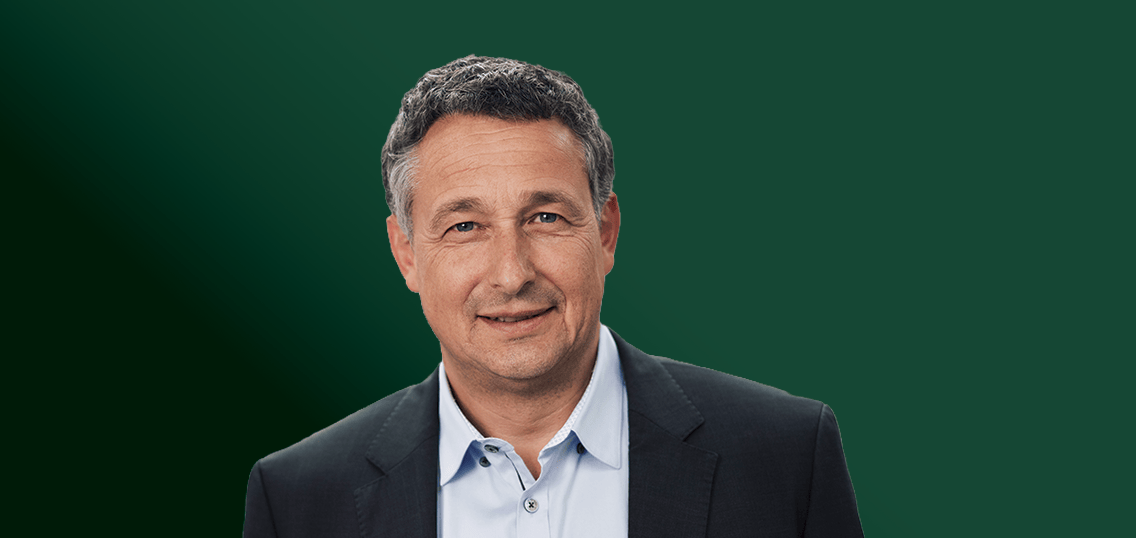
Hearing care in a broader context: A conversation with Dr. Stefan Launer
How has hearing research changed the way we think about hearing care? Dr. Stefan Launer reflects on his changing perspective in the Phonak Audiology Blog’s 10 Years, 10 Conversations series.
For Dr. Stefan Launer, VP Audiology, Functions & Science at Sonova, a fascination with the physics of hearing has grown into a broader interest in how hearing care supports everyday life. Here, he reflects on the conversations that helped change his perspective and why he sees holistic hearing care, powered by AI, shaping the field’s future.
Interview by Lisa Bacic
Stefan, looking back over the last decade in hearing research and innovation, what development has most changed the way you think about hearing care?
It was the realization of the multiple roles that hearing serves in daily life. While preparing a presentation for one of our senior leadership meetings, I had to think about what hearing is all about and how to translate it to the group.
I thought about hearing as our social glue, helping us connect with others, and as our environmental awareness radar, informing us of what is happening around us. I also reflected on how hearing is an emotional sense.
Finding the scientific evidence behind these roles changed my perspective tremendously. What really changed my thinking was looking beyond audibility and speech intelligibility to consider how difficulties in these areas affect people’s lives, from children to older adults.
Our work on holistic hearing care, examining the correlations between hearing loss and other health conditions, reinforced this broader perspective. It helped me realize that we need to place hearing care in the context of healthy living and aging. That was a major change for me from the research perspective.
It’s interesting because, when I initially looked at the question, I thought I could have answered by describing the technological advances, from analog to digital hearing aids through to AI. But technology is a means to an end. Understanding what hearing means in people’s lives has been the bigger change for me.
When you began your career, what inspired you most about hearing research and what continues to inspire you today?
That question takes me back to when I started hearing research in the early 1990s, when much of the discussion focused on how the inner ear works. The physics of the organ of Corti and the roles of the inner hair cells and outer hair cells fascinated me. There was considerable debate about these mechanisms and their implications for hearing instruments and hearing aid design.
I was also fascinated by the perceptual consequences of damage to the inner ear, when its mechanisms no longer function as they should. So, my fascination was with the physics and mechanics of hearing and their implications for technology.
At the same time, we were moving from analog to digital hearing aids. It was a real paradigm shift that opened up new possibilities for innovation and pushed the boundaries of what was technically feasible.
That fascination has never stopped. Today, we understand hearing care more broadly in the context of healthy living and aging. We consider auditory perception alongside cognition and how the brain processes sound.
The field has changed enormously, but there is still so much to learn. Basic and translational research continue to open new possibilities for technology development. That is what keeps me fascinated.
What experience surprised you or challenged something you previously believed about hearing or hearing care?
It was a conversation I had at a time when my focus was on the physics of hearing and digital signal processing.
At a conference, I walked to dinner with my dear colleagues Louise Hickson and Teresa Chisolm. They talked to me about patient care and aural rehabilitation, including the role of significant others. My first reaction was skeptical: “Well, that’s not technology. Is that any good?” But I was intrigued by their research into the patient’s perspective, including how people felt about hearing loss and the stigma associated with it.
It was a completely new world for me. I was used to thinking in terms of physical formulas and compression systems, and I could not approach these questions in the same way.
That conversation really changed my perspective. We subsequently developed our programs on holistic hearing care and brought in colleagues with backgrounds in psychology and neuroscience, as well as expertise in aging. I came to appreciate how much we could learn by looking more closely at the perspective of the people using our technology.
Looking back, are there any innovations in hearing care that you feel have been overlooked and deserve renewed attention?
Absolutely, and I would say some of these are major innovations. We love to talk about our technological innovations. However, I think there have been a couple of important innovations in care processes and delivery that deserve attention.
One example is the introduction of newborn hearing screening, which gained momentum in many high-income countries during the late 1990s. The major innovation was implementing not only screening, but also intervention programs to support the children identified with hearing loss. Together, these developments represented a major shift in pediatric hearing care, creating opportunities to support children much earlier in their development.
Alongside newborn hearing screening, cochlear implants became more widely available. More children with hearing loss could attend mainstream schools, changing the role of separate schools for children with hearing loss. These developments reflected a number of innovations in how care was delivered.
Today, another major shift is taking place as hearing care becomes more holistic and more closely connected with healthy living and aging. This also connects our work with the growing interest in longevity research.
We often put technological innovation front and center. I think we should give the same attention to innovations in care delivery and the difference they make in people’s lives.
How has the shift toward healthy aging changed the way you think about the future of hearing care?
It has completely changed my perspective. Phonak and Sonova have played an important role in advancing this perspective by conducting and supporting basic research.
Today, we are working to connect more closely with other health care professionals and disciplines, including general practitioners and ENT specialists, as well as colleagues in neurology and geriatric medicine. This broader perspective also changes how we approach people with hearing loss. We are thinking differently about how to motivate them to seek care and support them in adopting hearing care solutions.
Around 15 years ago, most of our research focused on technology and algorithms. Today, a substantial proportion also focuses on care delivery and holistic hearing care. That is a major shift in how we think about our work and its purpose.
What do you think will define the next era of hearing care?
This is an interesting question because many people might answer simply “AI,” but I see AI as a means to an end. The broader goal is holistic hearing care: how we approach people and integrate hearing care into their daily lives. I would say it’s holistic hearing care powered by AI.
That includes developing care delivery models suited to different settings, including high- and low-income countries. It also means asking how we can motivate people to seek care and support them throughout their hearing care journey. I think AI will help us address these questions.
AI is already adding valuable functionality to hearing aids, particularly through deep neural networks that enhance speech in noise.
I also see potential for generative AI to support people along their care journey. Through apps and chatbots, it could provide additional ways to motivate and coach people as they adopt hearing care solutions. For me, the opportunity lies in using these technologies to support the broader goals of hearing care.
Where do you see the greatest opportunity to strengthen the connection between scientific innovation and clinical care?
I think this is a very important point. For scientists, publication can sometimes feel like the end of the work. But when it comes to applying that knowledge in clinical practice, that is when the work begins.
I see a huge opportunity to build closer connections between the academic and clinical research community and the professionals working in hearing care centers. This is a field where I still see a huge opportunity to build and learn more about what is happening on the scientific side and how to apply it in practice.
There is also an opportunity to share knowledge across countries. When you look at hearing aid adoption, people often say, “It’s only 20%.” That is true globally, but in high-income countries, it is closer to 50%.1 Access to hearing care is much less established in some settings than in others.
We have learned a great deal about hearing care and its benefits. We should use that knowledge to support the development of services in countries where access is more limited. Experience from established services can inform new approaches, adapted to local needs and resources.
How has your global perspective influenced the way you think about hearing care?
It has influenced me tremendously in two ways. First, I have had the privilege of visiting research centers around the world that are doing groundbreaking work. Meeting the scientists and collaborating with them has introduced me to different perspectives and helped us translate research into our own work.
Second, visiting countries where hearing care is less established has helped me understand the challenges people face and where different solutions may be needed.
These experiences bring the questions into focus: What problems do we need to solve? Which solutions already exist? How can partnerships help us apply that knowledge? Bringing this outside-in perspective into our organization has been incredibly valuable. It helps us look beyond our own assumptions and learn from what is happening elsewhere in the world.
What gives you the greatest sense of optimism about the future of hearing care?
Hearing is an incredibly important sense. I often call it the “silent sense,” because its importance can be easy to overlook until hearing becomes difficult.
What gives me optimism is seeing how hearing care adoption has increased over the past 20 years in high-income countries. Alongside that, we have learned a great deal about hearing, and awareness of its importance is growing. This makes me optimistic that we can strengthen hearing care where hearing care adoption is not as high, as it is in other countries.
New technologies and a better understanding of care delivery give us more ways to support people. The growing focus on healthy aging and longevity also creates opportunities to make hearing care part of a broader conversation about health.
It’s fun to be part of this field because there is so much happening, both in our understanding of why hearing care matters and in what technology makes possible. That gives me a tremendous amount of optimism about the future.
Thank you, Stef, for sharing how your perspective has changed over the years and why the future of hearing care continues to inspire you.
This interview is part of our 10 Years, 10 Conversations series, celebrating a decade of the Phonak Audiology Blog. More conversations will be published over the coming months.
Reference
- Powers, T.A. (2025). Tracking Change: What MarkeTrak and EuroTrak reveal about global hearing aid trends. Seminars in Hearing; 46(3):225-231. doi: 10.1055/s-0045-1812038. PMID: 41278542; PMCID: PMC12638188.
About Dr. Stefan Launer
Dr. Stefan Launer is VP Audiology, Functions & Science.at Sonova AG and an Adjunct Professor at the University of Queensland in Brisbane. He studied physics at the University of Würzburg in Germany and conducted his PhD research in hearing science and psychoacoustics at the Universities of Göttingen and Oldenburg.
He joined Phonak’s research team in 1995. During his career at Phonak, now Sonova, he has managed teams in Audiological Engineering, Digital Signal Processing & Microelectronics, and Acoustic Design. In his current role, he leads Sonova’s Science & Technology program.
Read more by Dr. Stefan Launer: Previous articles on the Phonak Audiology Blog